
At the Laughlin Family Foundation, we believe that meaningful progress against rare cancer begins with bold, early-stage science. That's why we've been proud to fund research grants through the Foundation for Women's Cancer (FWC). These one-year grants are designed to give promising young investigators the resources and experience they need to launch careers that will shape the future of women's cancer treatment.
To date, we have funded three high-grade uterine serous cancer research grants, each targeting some of the most aggressive and difficult-to-treat forms of endometrial cancer. Here's a look at the researchers we've supported and the work they're doing on behalf of patients everywhere.
2024 Grant Recipient: Dr. Nikita Sinha, MD, UNC Chapel Hill
Research Title: Race, the Microbiome, and Endometrial Cancer Immunotherapy
Dr. Sinha's research explores a critically under-examined question: how do race and the uterine and gut microbiome influence the progression and treatment of endometrial cancer particularly for patients receiving immunotherapy?
This grant was one of the first young investigator awards of its kind through the FWC, breaking new ground not only in its science but in its commitment to understanding and addressing racial disparities in cancer care.
"I am incredibly grateful for the funding and support for our research project investigating the association between race and the microbiome in patients with endometrial cancer receiving immunotherapy. With the generous grant, we'll be able to better understand and address racial disparities in patients with endometrial cancer." — Dr. Nikita Sinha, MD
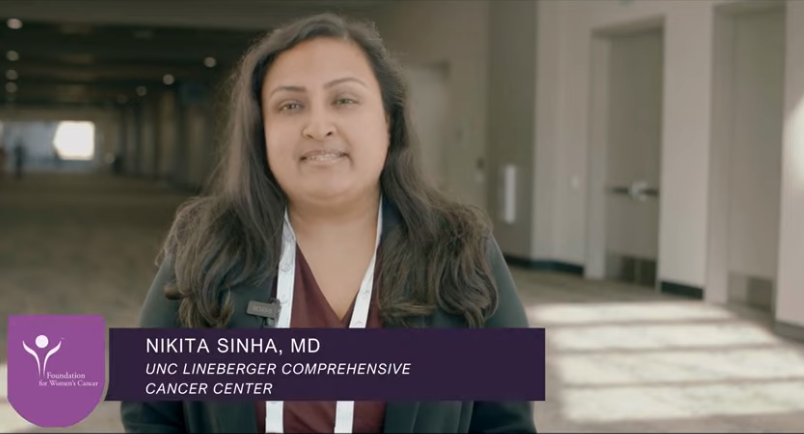
Watch the interview on YouTube of the FWC Researcher Feature: Nikita Sinha, MD
2025 Grant Recipient: Dr. Anh Q. Nguyễn, MD — The University of Chicago
Research Title: Exploring the Mechanisms of Resistance to Trastuzumab-Deruxtecan in Endometrial Cancer
Endometrial cancer is now the most common gynecologic cancer, and while many cases are treatable, women with advanced or aggressive forms face limited options and rising death rates. Dr. Nguyễn and her team are working to change that.
Their research focuses on T-DXd, a targeted drug that delivers chemotherapy directly to cancer cells with high levels of a protein called HER2. T-DXd has shown real promise in early trials, especially for cancers that resist traditional treatments. Unfortunately, not all patients respond and some tumors develop resistance over time. Dr. Nguyễn's work is aimed at understanding why, and how to stop it.
Scientists have found that in some tumors, T-DXd activates a survival signal inside the cancer cell. By combining it with other drugs, such as MEK or Wee1 inhibitors, they've found ways to shut down that signal and restore the treatment's effectiveness. To study these combinations, Dr. Nguyễn is using organoids: tiny, three-dimensional tumor models grown from real patient tissue that closely mimic how cancer behaves inside the body. Early results are promising.
"I am deeply grateful for the generous funding from the Laughlin Family Foundation and their supporters, which will enable us to further advance our understanding of the complex world of endometrial cancer. With your invaluable support, we hope our work will bring us one step closer to winning the fight against cancer." — Dr. Anh Q. Nguyễn, MD

Courtney Laughlin with FWC Young Investigator Grant Recipient Dr. Anh Nguyen in 2025
2026 Grant Recipient: Dr. Jennifer Ge, MD, PhD — Memorial Sloan Kettering
Research Title: Leveraging Homologous Recombination Deficiency and Genomic Instability for the Treatment of Endometrial Cancer(with mentor Dr. Carol Aghajanian)
Endometrial cancer is now the most deadly gynecologic cancer in the United States. Many patients with advanced disease relapse within two years of standard chemotherapy, and new, more precise ways to match patients to effective therapies are urgently needed.
Dr. Ge's research focuses on a class of drugs called PARP inhibitors, which have already proven successful in ovarian and other cancers particularly when tumors cannot properly repair DNA damage through a process called homologous recombination repair (HRR). When this repair system fails, a state known as homologous recombination deficiency (HRD), PARP inhibitors can cause cancer cells to die. In endometrial cancer, the genetic mutations most commonly associated with HRD in ovarian cancer are rare but other DNA repair genes are often altered, and early data suggest some patients may still benefit from PARP inhibitors. The challenge: there is currently no validated way to identify those patients.
Dr. Ge will use tumor DNA sequencing data from more than 5,000 patients treated at Memorial Sloan Kettering to develop and validate a method for measuring HRD through routine clinical testing. The goal is to create a practical biomarker that allows oncologists to better select patients for PARP inhibitor therapy moving care toward truly personalized treatment for a disease with few good options after relapse.
"To the Laughlin family: Thank you so much for your generous support for both uterine cancer research and for early-career investigators. As an oncology fellow transitioning to junior faculty, this grant will be instrumental in helping me launch my independent career and fulfill my dreams of becoming a physician-scientist. More importantly, it will allow us to apply the most cutting-edge technologies to better understand the molecular mechanisms driving aggressive endometrial cancers, helping to develop more personalized treatment options for women living with this disease. I am deeply honored and grateful for this opportunity — thank you again for all that you do!" — Dr. Jennifer Ge, MD, PhD
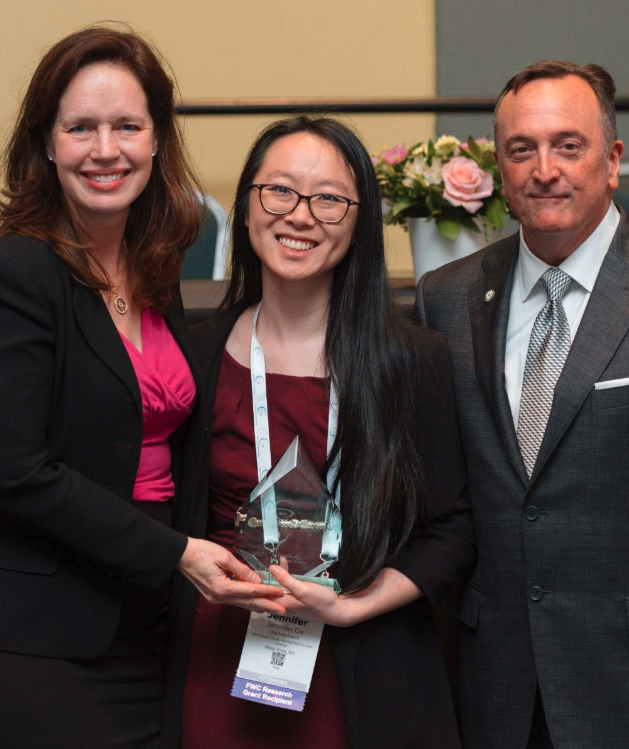
Dr. Jennifer Ge receiving her award at the annual SGO 2026 Meeting
Why These Research Grants Matter
Endometrial cancer is one of the only malignancies on the rise in both incidence and mortality, and it on track to become the deadliest gynecologic cancer this year. Due to the lack of funding, research, and information on endometrial cancer, patients are left with few treatment options and poor outcomes.
Each of these grants represents more than a research project. They represent a young physician-scientist given the chance to ask the hard questions about why some patients respond and others don't, about who gets left behind, and about how we can do better.
The Laughlin Family Foundation is proud to support this work through our partnership with the Foundation for Women's Cancer. Together, we are helping to build the evidence base that will shape tomorrow's treatments and give more women a fighting chance.
To learn more about the Foundation for Women's Cancer and their grant programs, visit foundationforwomenscancer.org.
