
Together for a Cure: Dr. Amanda Fader, Linda Laughlin, and the Power of Partnership
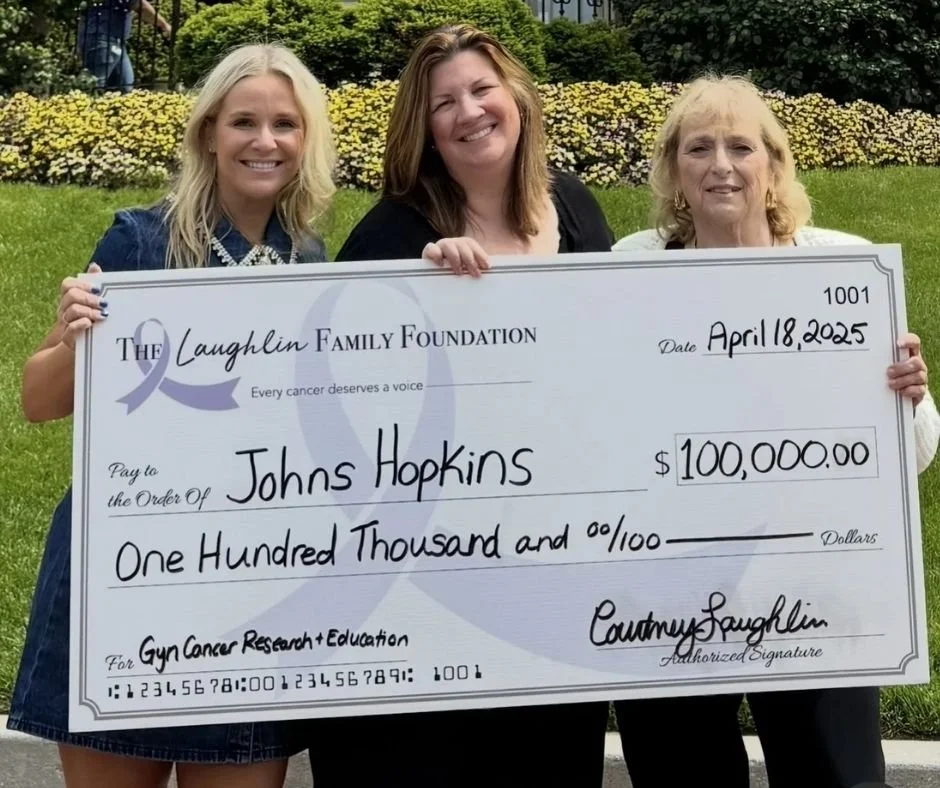
Since 2021, The Laughlin Family Foundation has proudly invested $400,000 in Dr. Amanda Fader’s groundbreaking endometrial cancer research at Johns Hopkins Medicine — funding work that is helping transform the future of detection, treatment, and care for women facing some of the most aggressive and underfunded gynecologic cancers. Dr. Amanda Fader is a nationally recognized gynecologic oncologist, surgeon, researcher and educator who has dedicated her career to advancing women’s cancer care.
Dr. Fader serves as a professor in the Department of Gynecology and Obstetrics at Johns Hopkins Medicine and is the Director of the Center for Rare Gynecologic Cancers. She is widely known for her expertise in treating complex and uncommon gynecologic cancers, including ovarian, uterine, cervical, and other rare reproductive cancers. Her work focuses on providing personalized, evidence-based care while helping to expand treatment options through innovative research and clinical trials.
Throughout her career, Dr. Fader has been a leader in minimally invasive surgical techniques, helping improve outcomes and recovery experiences for women undergoing cancer treatment. She has authored numerous scientific publications, lectured internationally, and contributed to advancements in gynecologic oncology that have influenced patient care around the world.
According to Dr. Fader, one of the most meaningful partnerships in her career began when she met Linda Laughlin following Linda's cancer diagnosis. What started as a physician-patient relationship grew into a shared commitment to improving outcomes for women facing gynecologic cancers. Our collaboration highlights the powerful role that patients, advocates, and physicians can play when united by a common mission. Over the last four years, this partnership has helped drive meaningful progress in areas that are changing lives today while shaping the future of women’s cancer research for generations to come.
Through this investment, our support has helped make possible:
• Advancements in life-extending treatment options — Dr. Fader led a landmark clinical trial published in the New England Journal of Medicine showing that combining immunotherapy with chemotherapy significantly improves outcomes for women with advanced endometrial cancer, helping change the global standard of care.
• Breakthrough early detection research — Funding has accelerated development of PapSEEK, an innovative screening technology designed to detect cancer-related DNA through routine Pap testing, with the potential to identify endometrial and ovarian cancers earlier — and eventually before cancer fully develops.
• Expansion of rare cancer research programs — Support has helped grow the Johns Hopkins Center for Rare Gynecologic Cancers, now serving nearly 500 patients, while positioning Johns Hopkins at the forefront of precision medicine for aggressive and rare gynecologic cancers.
• Global scientific collaboration and physician education — Seed funding helped launch the inaugural Johns Hopkins Endometrial Cancer Symposium, bringing together leading scientists and physicians from 15 countries, resulting in new research publications and international collaborations advancing the field worldwide.
• Leadership in international clinical trials — Dr. Fader now serves as principal investigator on multiple international clinical trials focused on some of the hardest-to-treat gynecologic cancers, offering new hope to women facing the most aggressive diagnoses.
• National advocacy shaping the future of research funding — Support has allowed Dr. Fader to advocate on Capitol Hill for restored NIH and Department of Defense funding for endometrial cancer research while helping shape future federal investment in women’s cancer research.
At the Laughlin Family Foundation, we believe philanthropy should do more than fund research — it should accelerate change. Our partnership with Dr. Amanda Fader and Johns Hopkins is proof that strategic investment in innovation can lead to earlier detection, better treatments, stronger advocacy, and ultimately a future where fewer women face these devastating diagnoses without answers.
